- Content Planning
- Checklist
How to measure an SEO page refresh without trusting one rank check
Editorial responsibility: SearchCub
Measure a page refresh by comparing consistent query-and-page evidence before and after the change, alongside the reader action you intended to improve. One manual search or a better average position cannot establish success on its own.
Start the measurement plan before editing. Otherwise you may find yourself selecting whichever metric happens to improve afterward.
Save a simple baseline
Record the URL, revision date, changed sections and intended outcome. For example: “Help beginners choose between two methods using a verified comparison.” This is an editorial hypothesis, not a promised increase in search traffic.
Save the reporting scope: search type, country, device, query group and date range. Keep a copy of the original export. Note other relevant changes, such as a redesign, a promotion or a seasonal shift.
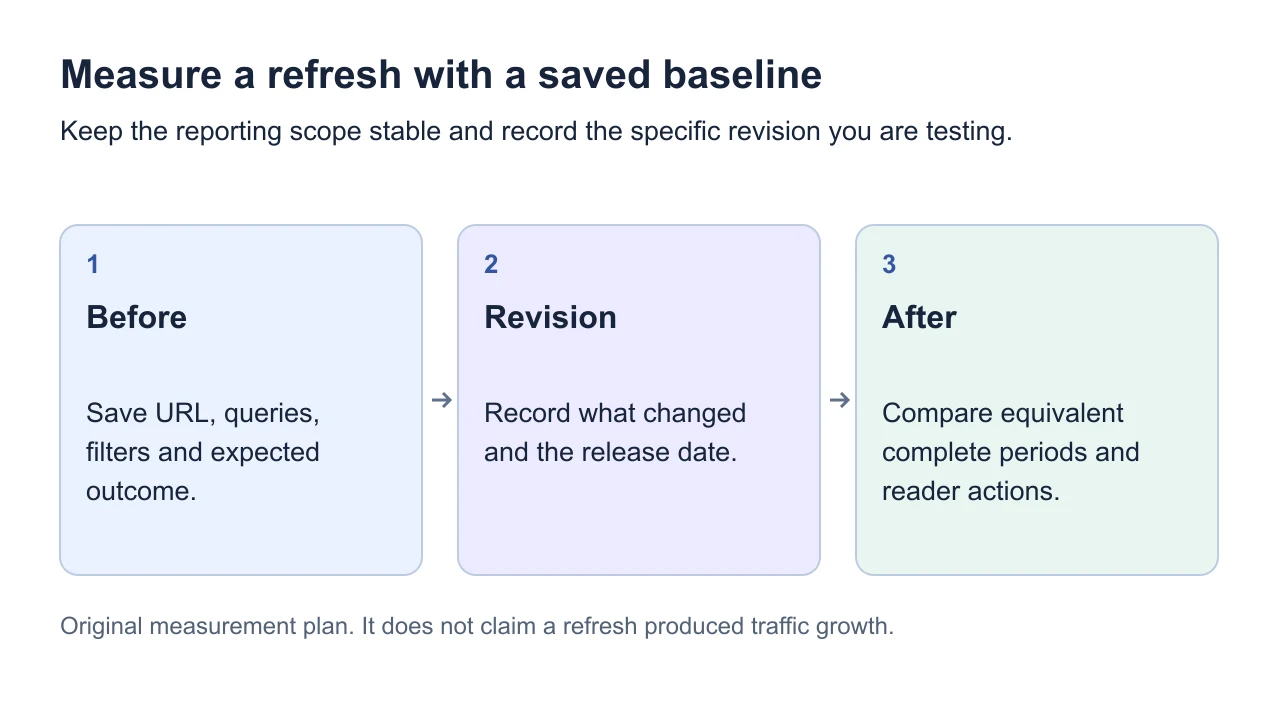
An illustrative measurement design, without a claim that any refresh produced growth.
Compare like with like
Choose equivalent complete periods and maintain the same filters. A 28-day comparison is a useful starting worksheet choice because it includes four of each weekday; it is not a Google rule or a guaranteed time for a change to work. Allow more time when the evidence remains sparse.
Search Console supports page, query, country and device filtering, plus date comparisons. Its filtering and comparison documentation explains the controls. Account for seasonality when deciding whether a previous period is a sensible baseline.
Review clicks and impressions with CTR and average position. Check the query groups individually before interpreting a page total: the mix of searches can change. Keep a manual SERP observation as a dated context note, rather than treating it as the measurement record.
Interpret the result before editing again
What you observe | Next investigation |
|---|---|
More impressions, little change in clicks | Query relevance and search preview |
More clicks, unclear reader benefit | Whether visitors complete the intended action |
One query improves while another declines | Changes in query mix and page scope |
Very few observations | More time or a broader comparable period |
A decline alongside other site changes | Technical and site-wide context |
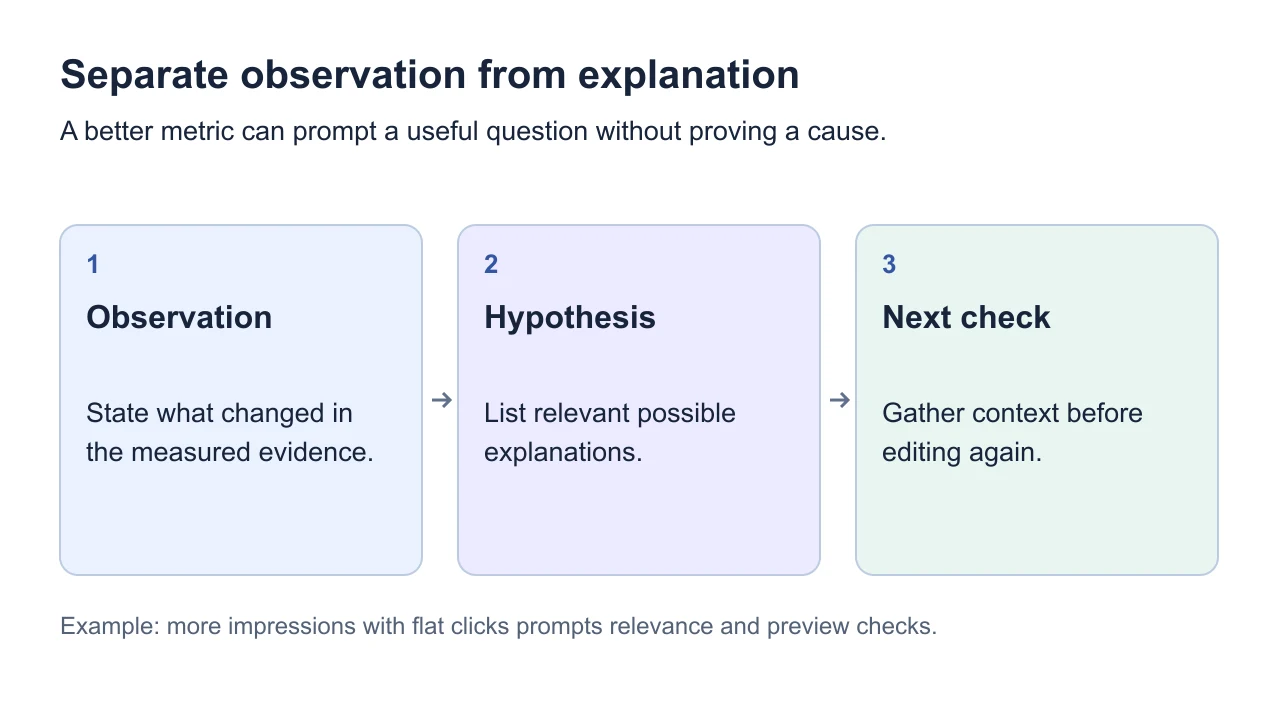
Possible explanations are hypotheses to test, not diagnoses generated from a metric alone.
Google notes that other events, including changes to competing sites or audience interest, make causal attribution difficult. A change following your edit is useful evidence, but not proof that the edit caused it. Performance-report use cases.
Use the refresh-or-rewrite guide when the answer still needs work, and the ranking-change investigation when the decline might extend beyond the article. Rewriting a working page after every fluctuation makes learning harder.
Finish with a dated outcome: retain the revision, make a specific follow-up change, or gather more evidence. Keep the original hypothesis alongside that decision. Use SearchCub for relevant follow-up research, without treating a third-party estimate as your site's measured traffic.