- On-page SEO
- Checklist
Does your page answer its ranking queries? A short intent audit
Editorial responsibility: SearchCub
Compare a page's observed query groups with the answer it actually delivers before rewriting it. The useful question is whether a visitor can complete the task that brought them there.
Query appearances alone do not prove the page is a good answer. Equally, an unexpected phrase is not automatically a reason to expand the article.
Build a four-column audit
Use this worksheet for one URL and a consistent reporting period:
Query group | Reader wants to | Page currently provides | Editorial action |
|---|---|---|---|
Illustrative: remove coffee stains from a mug | Follow a safe cleaning method | General advice with missing steps | Improve the method after verifying it |
Illustrative: best reusable coffee cup | Compare products | A cleaning tutorial | Keep the tutorial focused |
Illustrative: why a mug stains | Understand a cause | A brief explanation | Expand only if necessary to follow the method |
These fictional examples demonstrate the audit structure. They are not rankings, tested cleaning recommendations or measured demand.
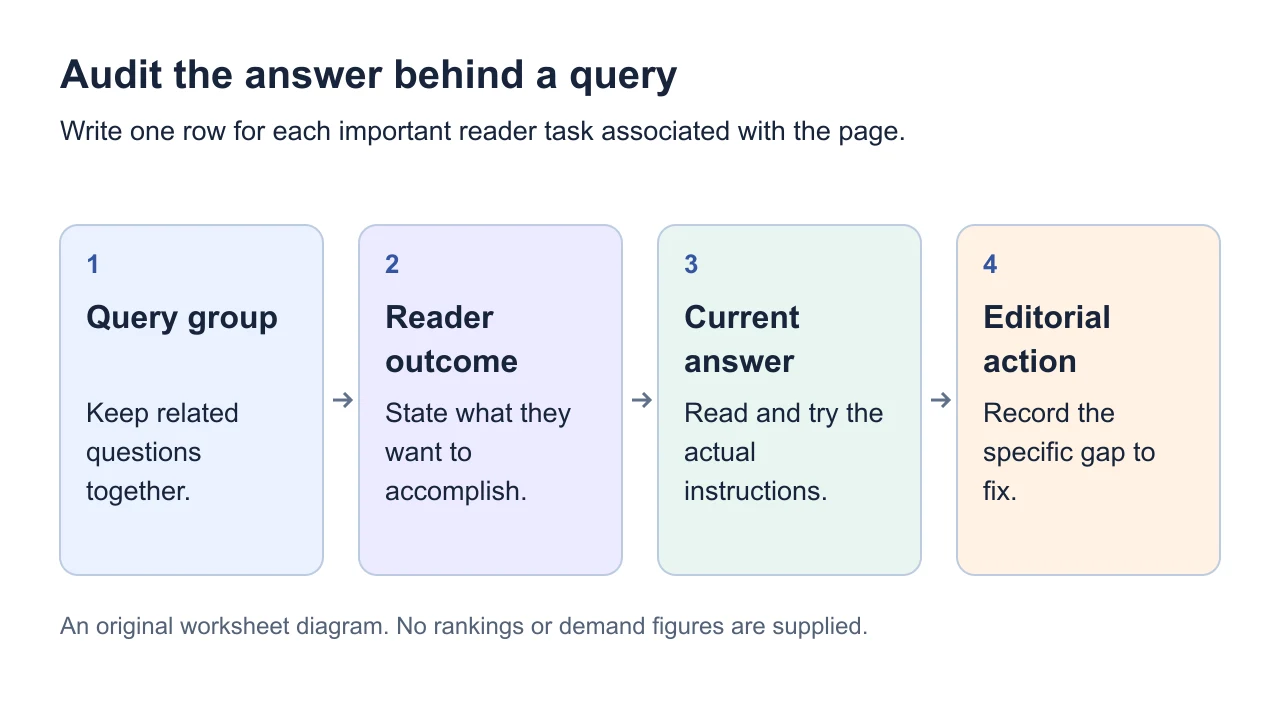
Group queries by the outcome a reader seeks, not simply by a shared noun.
Start with your page-filtered query evidence, then read the article as a first-time visitor. Can you find the answer quickly? Are the steps complete? Does the page make promises its evidence cannot support? Collect the evidence with our page keyword workflow.
Investigate the gaps that matter
Prioritize a gap when all three conditions apply:
The task genuinely belongs on this page.
You can show exactly what the reader cannot currently do.
You can supply a reliable answer, useful example or working resource.
An unrelated high-volume phrase fails the first condition. A longer introduction that merely repeats the topic fails the second. Unsupported advice fails the third.
A low CTR can prompt investigation, but is not a diagnosis by itself. Review which queries and pages are involved, and whether the title represents the answer. Google describes title/content alignment as one possible response to low CTR in its page-effectiveness guidance.
Choose a precise editorial response
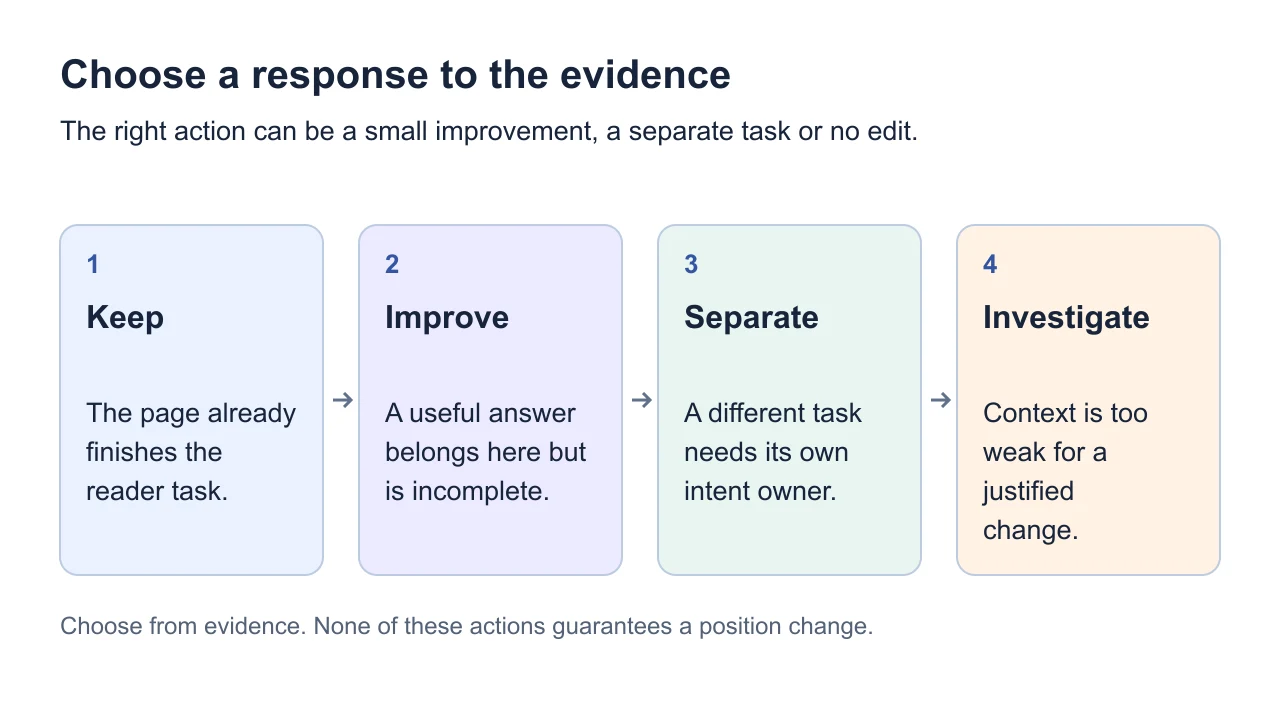
An original decision aid; none of the branches guarantees a ranking change.
Keep a clear answer that already serves the task. Improve a missing explanation or unreliable step within that task. Separate a different reader goal only after checking existing coverage. Investigate when the query or evidence is too ambiguous to act on.
Write the change as a testable editorial statement: “Add a verified sequence so a beginner can complete the method,” rather than “add more SEO keywords.” Check search intent if the expected page format remains unclear, then use the refresh-or-rewrite guide to choose the size of the revision.
Finish with a short list of required changes, supporting sources and checks. Open SearchCub for further research when needed, but let the reader's incomplete task determine what belongs in the revised page.