- Keyword Research
- Tutorial
Keyword Research for Food Bloggers: One Dish, Many Posts
Editorial responsibility: SearchCub
Keyword research for a food blog works best one dish at a time: search the dish, sort what people ask into a recipe, follow-up guides, comparisons and careful health answers, then write the recipe first and the rest in the order the searches point to. You will end with a list of posts for one dish and the order to write them in. The tool is SearchCub's Keyword ideas, which turns one topic into a table of up to 100 related searches.
Recipe bloggers face a particular mix in their keyword lists. The searches around one dish come from people who want to make it, people who want to buy it, people who want a famous chain's version and people asking whether it is good for them. Each group needs a different post, or no post at all. Keyword research for bloggers covers choosing a topic in general; this guide adds the decisions that are specific to food.
The example: one dish, 100 searches
The example is cold brew coffee, looked up in Keyword ideas for the United States on 4 October 2026. It is a drink rather than a plate of food, but it behaves like any dish on a recipe blog: it has a method, a ratio, ingredient choices and questions about what is in it. The lookup loaded 100 related searches. Every number below is a SearchCub estimate from that result, or from the analysis pages opened inside it.
Step 1: Search the dish and open Lines
Open Keyword ideas, choose Keyword, type the dish the way a cook would say it, choose your readers' Region and click Search. You get a Keyword set with Monthly searches, Difficulty and an intent tag on each row.
Then click Lines. In the product's words, "Lines group loaded ideas that share a word, and questions", so one click shows the main kinds of search around your dish:
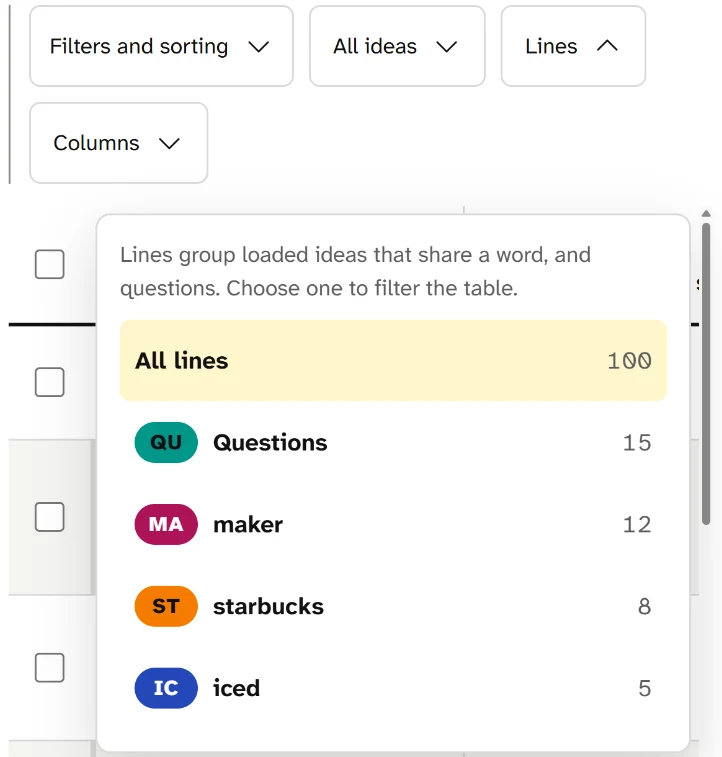
Each line is a different kind of reader. Questions holds how-to and caffeine questions, maker holds equipment, starbucks holds one chain's drinks and menu, and iced holds the cold brew versus iced coffee comparison. That is four kinds of post, or non-post, before you read a single row.
For a food blog, the lines translate like this:
Line | What the searcher wants | What it means for you |
|---|---|---|
Questions (15) | To make the drink, or to know something about it | Your recipe and your question posts |
iced (5) | To choose between two drinks | One comparison post |
maker (12) | Equipment | A post only if you test the equipment yourself |
starbucks (8) | One chain's drinks, menu and caffeine | Usually not yours to answer |
Step 2: Read the intent tags and the glance band
Each row carries an intent tag. Recipe and question rows are Informational: the searcher wants to learn. Machines, beans and chain drinks are mostly Transactional, meaning the searcher wants to buy, and "best" lists are Commercial. To keep only the learning rows, open Filters and sorting, set Intent to Informational and click Apply filters. Read the words as well as the tag: the Informational filter still keeps starbucks menu, a search for a menu at 1.5M a month, not a recipe. Search intent explains the tags in more depth.
Above the table, Loaded ideas at a glance sums up the set:
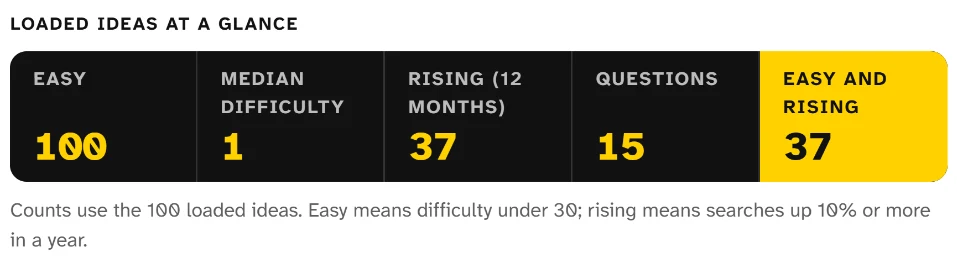
All 100 ideas count as Easy, meaning difficulty under 30, and the median difficulty is 1. When difficulty is this low across a whole dish, it stops separating one post from another, so choose by what the reader wants and how many people ask.
The band also counts 37 rising ideas, with searches up 10% or more in a year. Use Rising as a tie-breaker between two otherwise equal posts, not as a reason to write one.
Step 3: Sort the searches into posts
Now read the Informational rows and group the wordings that need the same answer. Searches that ask the same thing share one page; a different question gets its own. For cold brew, the set sorts into six posts, one for later and two holds:
Post | Searches it answers (monthly searches, difficulty) | Tag |
|---|---|---|
1. The recipe |
| Informational |
2. The ratio guide |
| Informational |
3. Which coffee to use |
| Informational; the first is also Transactional |
4. A method variant |
| Informational, Transactional |
5. The comparison |
| Informational |
6. The caffeine question |
| Informational |
Later: a different drink |
| Informational |
Hold: chain drinks |
| Transactional |
Hold: equipment |
| Transactional; Commercial |
Two rows have nothing to do with making the drink, starbucks menu and coffee and whiskey bath and body works, so they get nothing.
Don't add up a group's searches to size it. SearchCub's note on Monthly searches says "Related keywords may share estimates, so their volumes should not be added together." The four recipe wordings are one audience asking in four ways, so plan the recipe post around its largest wording, not the sum.
Step 4: Read the recipe signals before you write
Three signals shape food posts in ways the table alone does not show.
Video and photos. Click how to make cold brew coffee to open its Keyword analysis, then scroll to its SERP overview:

Two of the five features on this results page are video: Short videos and Video. On 4 October 2026 the second and third results were an Instagram reel and a Pinterest pin, so plan step photos and, if you can, a short video for the recipe post.
The same analysis suggested "Consider a visual explanation" under Content opportunities. The ratio search looked different: its results page showed an Images block instead of video, and the fourth result was a ratio calculator. For the ratio guide, plan a clear table of amounts first, and save the video for the recipe.
Seasonal peaks. The ratio also has demand of its own. Open cold brew coffee ratio in Keyword overview and click More keyword details:
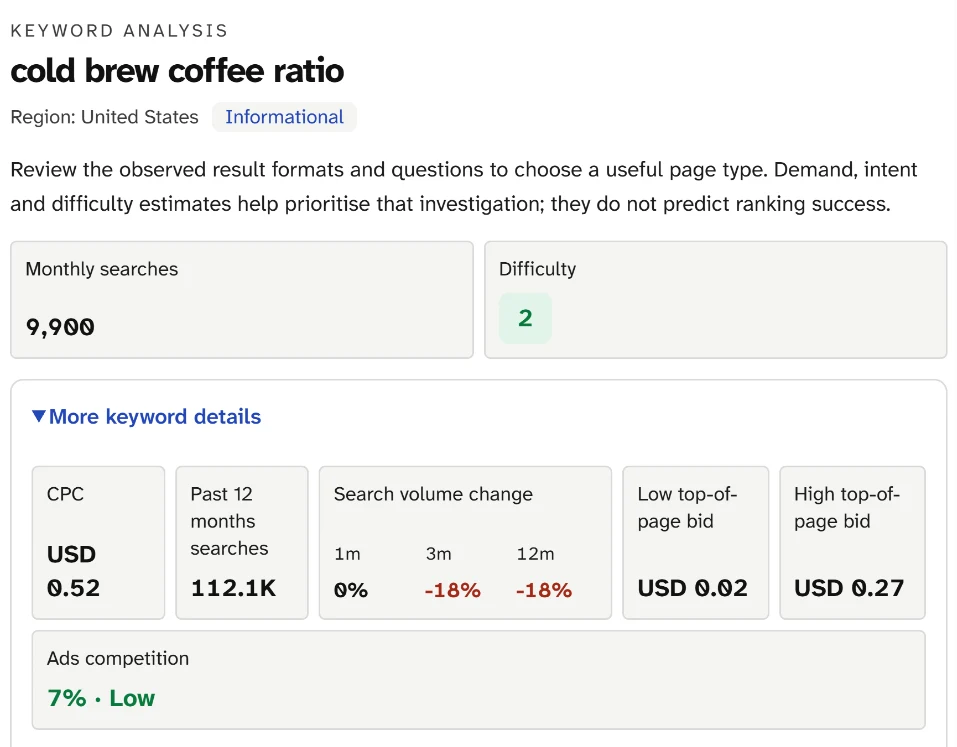
An Informational search with 9,900 searches in an average month, difficulty 2 and 112.1K over the past 12 months. That is a post of its own, not one line in the recipe, even with its 12-month change of −18%.
Below those cards, the Search trend (monthly searches) chart is lowest from November to February and highest in June, at 14.8K. That summer peak fits a cold drink, and one of the ratio's top results was even titled "A Guide to Summer Coffee". Write the ratio guide in the quiet months so it is live before the climb that starts after February. This example only read the ratio's 12-month chart, so open your recipe's own chart before you schedule it. Seasonal keywords shows how to work back from the start of the climb.
Health questions. The Questions line includes how much caffeine is in cold brew coffee (6,600 a month) and does cold brew coffee have more caffeine (3,600). The two results pages also asked "Is cold brew the healthiest way to drink coffee?" and "Is cold brew good for diabetics?".
Those are health questions, and Google says its systems give even more weight to content with strong E-E-A-T (experience, expertise, authoritativeness and trustworthiness) on "topics that could significantly impact the health, financial stability, or safety of people" (Google: creating helpful content). For a recipe blog, that means answering what you can measure in your own kitchen, citing a primary source for anything about health, and leaving out what you can't support. The U.S. Food and Drug Administration's consumer page on caffeine notes that caffeine amounts vary between products and container sizes, so a figure for someone else's cold brew is not a figure for yours.
Step 5: Choose what to write first
With the posts sorted, four rules settle the order:
Write the page the others link back to. The recipe is the biggest Informational search about making the drink, and every other post sends readers to it.
Then the follow-up questions a cook asks next, largest and clearest first. Prefer Informational rows you can answer from your own kitchen.
Check two-tag rows before you commit. A row tagged Informational and Transactional may already be answered by product pages. SearchCub's own Suggested next actions for this set began with "Review coarse ground coffee for cold brew", with the advice to "Review the result formats and supporting questions to decide what would answer this query well."
Hold what needs something you don't have, such as machines you haven't tested or a reason to compete with a chain's own drinks.
For cold brew coffee, that gives this order:
Order | Post | Why it goes here |
|---|---|---|
1 | How to make cold brew coffee | The main recipe: 27.1K a month at difficulty 21, with video results to plan for |
2 | Cold brew coffee ratio | 9,900 a month at difficulty 2, asked in People also ask, and seasonal, so ready before spring |
3 | Cold brew vs iced coffee | 8,100 a month at difficulty 0 and marked Easy and rising; the iced line's five wordings share this page |
4 | Which coffee to use, and the French press method | 22.2K a month each, but also tagged Transactional: check their results pages first, and fold them into the recipe if product pages hold them |
5 | How much caffeine is in cold brew | 6,600 a month, worth writing only with a source you can cite |
Later | Nitro cold brew, chain copycats, machine reviews | A different drink, Transactional searches and equipment you would need to test |
That is six posts from one dish, in an order you can explain. When you sit down to write the recipe, how to write a blog post from what searchers ask turns the same cold brew search into a section-by-section outline. If you are still deciding whether one dish or drink can carry a whole blog, how to choose a blog niche tests that question on the same set.
What to check for yourself
Every figure here is a SearchCub estimate for the United States on 4 October 2026, and difficulty describes competition for a place in the results, not how hard the recipe is to cook. Results pages change, so open each post's SERP overview again when you start writing it. And no keyword set knows whether your recipe works: make it, measure it and photograph it before you publish.
Your next step
Open Keyword ideas, type the dish you make best, choose your readers' Region and click Search. Click Lines, sort the rows into posts with the tables above, and start with the recipe.