- Content Planning
- Tutorial
Turn one keyword cluster into a 30-day content plan
Editorial responsibility: SearchCub
Turn a keyword cluster into a 30-day plan by selecting distinct reader tasks, mapping them to current pages and scheduling research, drafting, review and refresh work together.
The calendar should reflect how much verified content you can finish. Thirty days is a planning window, not a promise that articles will rank or a rule about how often you must publish.
This walkthrough uses a hypothetical balcony-gardening blog. Its candidate cluster is “starting a small balcony herb garden.” The queries, inventory and schedule below are illustrative; they are not measured keyword demand or recommendations about growing particular plants.
1. Set a reader outcome for the whole cluster
Write one sentence: “Help a beginner plan a small balcony herb garden before buying supplies.” That gives the cluster a purpose and excludes unrelated topics.
Possible reader tasks include understanding the space, choosing containers and preparing a shopping checklist. Write each task separately. A broad collection of plant names would be harder to turn into a coherent plan because it does not describe what readers need to do.
Fix the market and language used for research. Country, seasonal context and local product availability can matter for gardening content. Do not combine observations from different markets and present them as one result sample.
2. Map tasks before setting dates
Suppose the hypothetical blog already has a basic balcony-planning guide but no container-comparison page. Read the guide and record which tasks it covers. A new phrase about planning a tiny balcony may belong in that existing article.
Reader task | Hypothetical inventory finding | Planning action |
|---|---|---|
Assess the available space | Existing planning guide needs a clearer example | Refresh |
Compare container options | No current page owns the comparison | New candidate |
Prepare a supply checklist | Could be part of the refreshed guide | Add a useful section rather than another URL |
Do not make four articles because four phrases appear in the cluster. Use the keyword-to-page map to justify each destination.
For a refresher on choosing the initial questions, start with keyword research for bloggers.
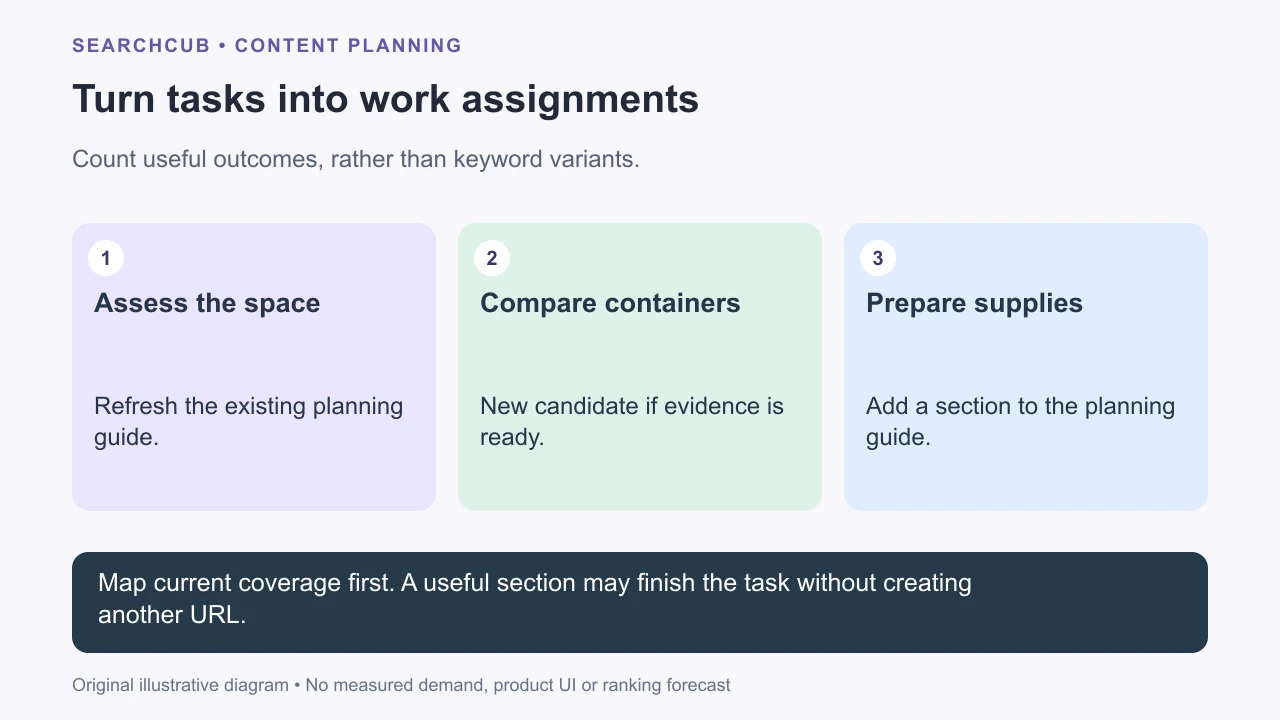
Illustrative scope: the number of keywords does not determine the number of new pages.
3. Schedule the evidence before the writing
List the evidence required for each assignment: a real example, source checks, usable photographs, comparison criteria and any specialist input. Put those dependencies on the calendar.
For the comparison candidate, access to real containers and accurate measurements might be essential. If the evidence will not be available, hold that assignment or narrow it to a planning checklist that you can support. Do not fill the calendar with invented tests.
Allow time for another person to review the actual article and images. Editing the outline cannot verify whether the finished tutorial works or whether a table overstates its findings.
4. Build a month with four work blocks
The following schedule is an example of capacity planning, not a recommended publication quota:
Days | Main work | Reviewable output |
|---|---|---|
1–7 | Inventory, query/result research and evidence collection | Page map and two complete briefs |
8–14 | Draft the refresh; prepare the worked example and images | Full refreshed article candidate |
15–21 | Review the refresh; draft the distinct comparison if evidence is ready | Resolved findings and comparison candidate |
22–30 | Complete checks, arrange relevant links and review early feedback | Release candidates and a documented next-month decision |
A faster team can prepare more assignments in parallel, but the evidence and review still need owners. If your reviewer has capacity for only two complete pieces, drafting ten extra pieces will create a waiting queue rather than ten finished posts.
5. Include links and maintenance in the same plan
Choose the existing article that will point readers to each new piece. Add helpful outgoing links where readers naturally need another task. Give someone responsibility for checking destinations after release.
Keep a refresh slot for evidence that changes while you work: updated product availability, a broken link or a confusing example. Cosmetic date changes do not replace substantive maintenance.
Use the existing-post update guide when the selected work is a refresh rather than a new page.
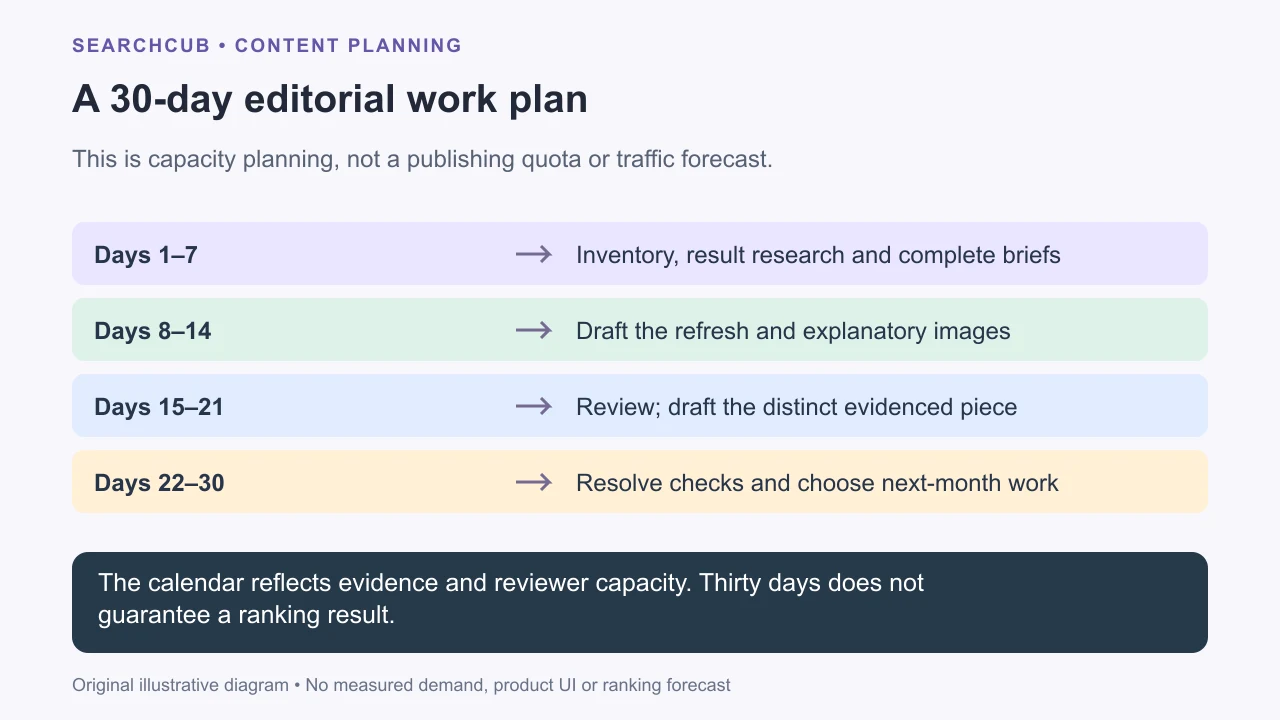
The example leaves room for evidence and correction, not only writing dates.
6. End with a learning decision
Record which assignments finished, which were held and why. Compare follow-up search data using the same market and comparable periods, alongside reader feedback where available. Early sparse data should remain inconclusive.
Google's SEO Starter Guide explains that changes can take different amounts of time to appear in search results. A 30-day production plan therefore does not prove that the chosen cluster will succeed in 30 days.
Your next month's plan should reflect what the evidence supports: continue a useful task, correct a weak answer or investigate a new question. Use SearchCub alongside this plan, with the page map and completed briefs available to whoever reviews the research.