- Informational
Seasonal Keywords: How to Plan Content Before Demand Peaks
Editorial responsibility: SearchCub
Publish seasonal content before search demand starts rising, so readers can find a useful page when they begin researching. Plan around the beginning of the buying or planning period, with time for research, writing and checks before publication.
A gift guide, school packing checklist and winter maintenance tutorial can have very different lead times. Your calendar should come from the audience's search pattern and the work required to make the page useful.
1. Look for a pattern that repeats
Seasonal demand returns around a recurring event or time of year. A single spike could instead reflect a news story, product launch or unusual promotion.
In SearchCub, choose Keyword, enter the topic, set your audience's Region, and click Search. Open a candidate and inspect Search trend (monthly searches). Hover, focus or tap a month to see the supplied estimate. Record when demand begins rising, when it peaks and when it falls.
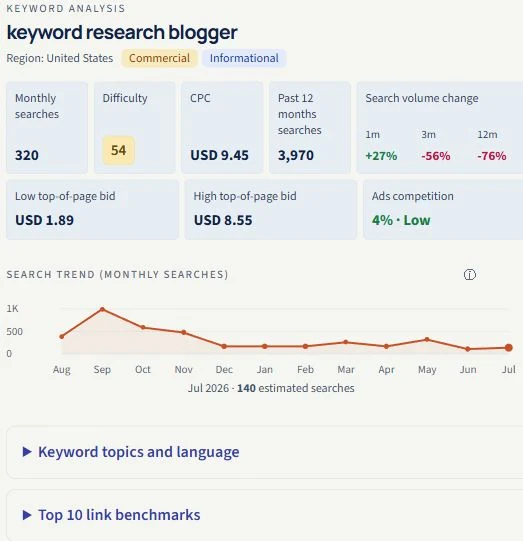
SearchCub keyword analysis, captured 14 September 2026. Read the monthly pattern here, then check multiple years before calling it seasonal.
Use the monthly history to spot a possible pattern, then compare multiple years in Google Trends for the same market. One year alone cannot establish that the rise will repeat. Trends uses sampled, normalized interest on a 0–100 scale; its values are not monthly search counts. See Google's explanation of Trends data.
Also check whether the event moves between dates or whether the relevant season differs by country. Worldwide totals can blur the timing your reader actually cares about.
2. Find the beginning of demand
The peak tells you when interest is greatest. The earlier rise tells you when readers start needing help.
For a gift guide, shoppers may compare options before they buy. For a planting tutorial, readers may research equipment before conditions are right. Inspect the queries and result pages to understand that sequence. Our search-intent guide explains how to match the page to the reader's task.
Write down three dates or windows:
Demand begins: the first sustained rise supported by the history.
Reader's deadline: when a purchase, booking or preparation must happen.
Your publication target: early enough to finish checks before that demand begins.
Do not pick a publication date by subtracting a universal number of weeks. A tested comparison needs more preparation than updating a proven checklist.
3. Work backwards from a useful page
Suppose several years of research for a particular gift topic show demand rising in October and peaking in November. This is an illustrative planning example, not a measured keyword result.
Window | Work to complete |
|---|---|
August | Choose products, test them and take photographs. |
September | Write or refresh the guide, check links and publish. |
October | Check stock, prices and whether readers can follow the recommendations. |
November | Keep availability and relevant delivery information accurate. |
After the season | Review which questions and pages attracted useful visits. |
The September target creates room for the work and discovery; it does not guarantee an October ranking. Google says recrawling can take days to weeks, and a request does not guarantee inclusion. Its recrawling guidance explains the available checks.
For your calendar, replace those months with the pattern and preparation time you actually found. Assign the research, draft, review and publication dates separately.
4. Keep the seasonal page useful when demand changes
Before each season, check facts that age quickly: dates, availability, product versions, opening hours and booking or delivery requirements. Keep a recurring guide on its existing URL when it still serves the same purpose. A separate event archive can have a different job.
If interest rises earlier than expected, prioritize a complete answer with verified essentials. Add optional comparisons or demonstrations when they are ready. An unfinished recommendation is a poor response to a busy period.
5. Review the whole season
Compare the page's Search Console performance with the same seasonal window in a previous year, where available. Keep the country and search type consistent. Review impressions and clicks alongside useful actions on your site.
A drop after the season may be expected. Google's traffic-drop guidance recommends checking wider search interest before treating the decline as a page problem.
Save what you learned: when demand began, what delayed publication, which information needed updating and when to start next time. That record makes the next content calendar more useful than repeating last year's dates.