- On-page SEO
- Checklist
How to choose a primary keyword for an existing page
Editorial responsibility: SearchCub
Choose a primary keyword by matching the page's useful purpose to a real reader task, then check query evidence and competing result formats before changing the page.
A primary keyword is a planning anchor. It is not a restriction that the URL must rank for one exact phrase, or a reason to repeat that wording in every paragraph.
Start with the page's job
Write a one-sentence answer to: “Who should use this page, and what should they be able to do afterward?” Read the actual page rather than relying on its title.
For example, a hypothetical article that helps beginners keep a balcony herb garden alive has a different job from a shopping category selling herb planters. Both mention pots, but only one teaches a maintenance workflow.
Now list candidate queries from existing page evidence and genuine reader questions. Keep observations separate from suggestions. If you have not measured demand or difficulty, leave those fields unknown. The page keyword workflow explains how to collect a dated query list.
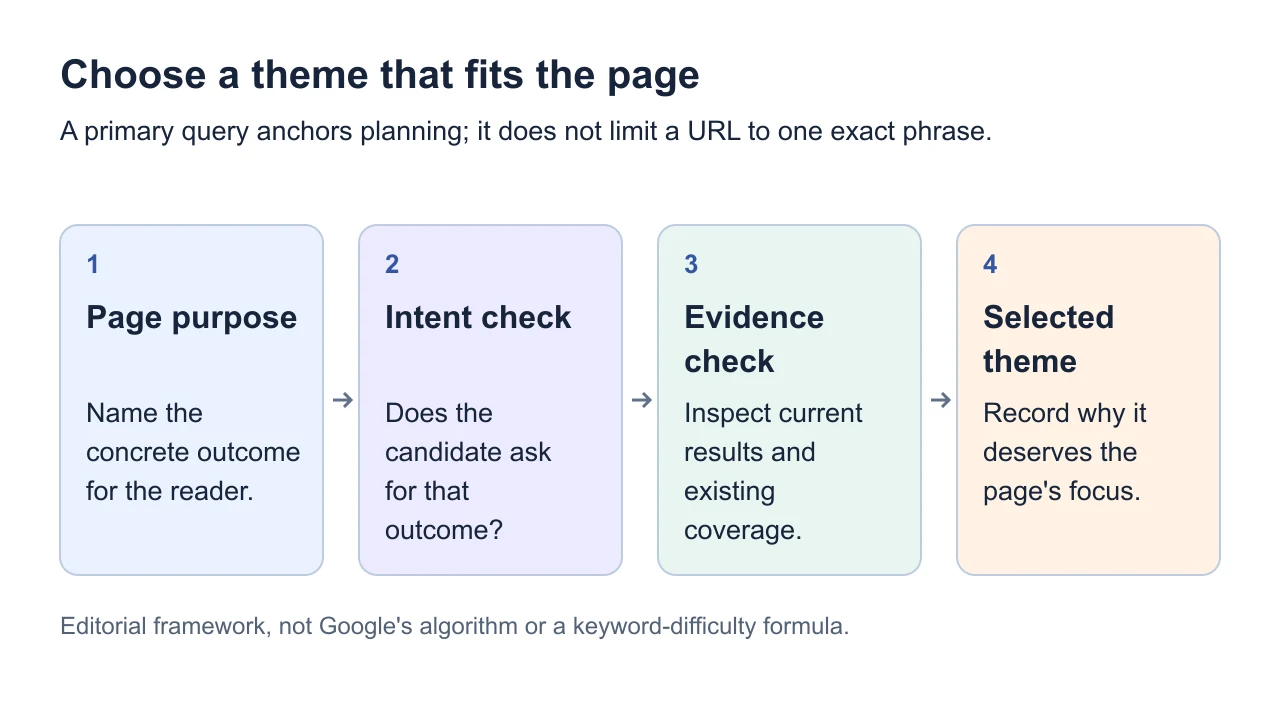
This is an editorial decision framework, not a search-engine scoring formula.
Compare three candidates, not fifty
Use a small decision table. The following example is illustrative, with no measured search volumes:
Candidate | Fit with a beginner maintenance guide | Decision |
|---|---|---|
how to care for balcony herbs | Directly matches the demonstrated task | Investigate as the primary theme |
best herb planters | Asks for a product comparison | Leave to a separate comparison if justified |
balcony garden ideas | Could mean design inspiration rather than care | Inspect intent before expanding scope |
For each candidate, examine current results in the intended market. Record the date, dominant page formats, audience constraints and unanswered practical questions. This research provides context; copying the headings of ranking pages does not supply original value.
Check the rest of your site. If another useful page already owns the same task, decide whether to refresh that page or make each purpose genuinely different. Use the cannibalization checklist before creating overlapping URLs.
Make the page's promise consistent
Once the choice is supported, align the title, opening answer and main sections around the task. Preserve useful related explanations when the reader needs them. Remove sections that pull the article toward a different promise.
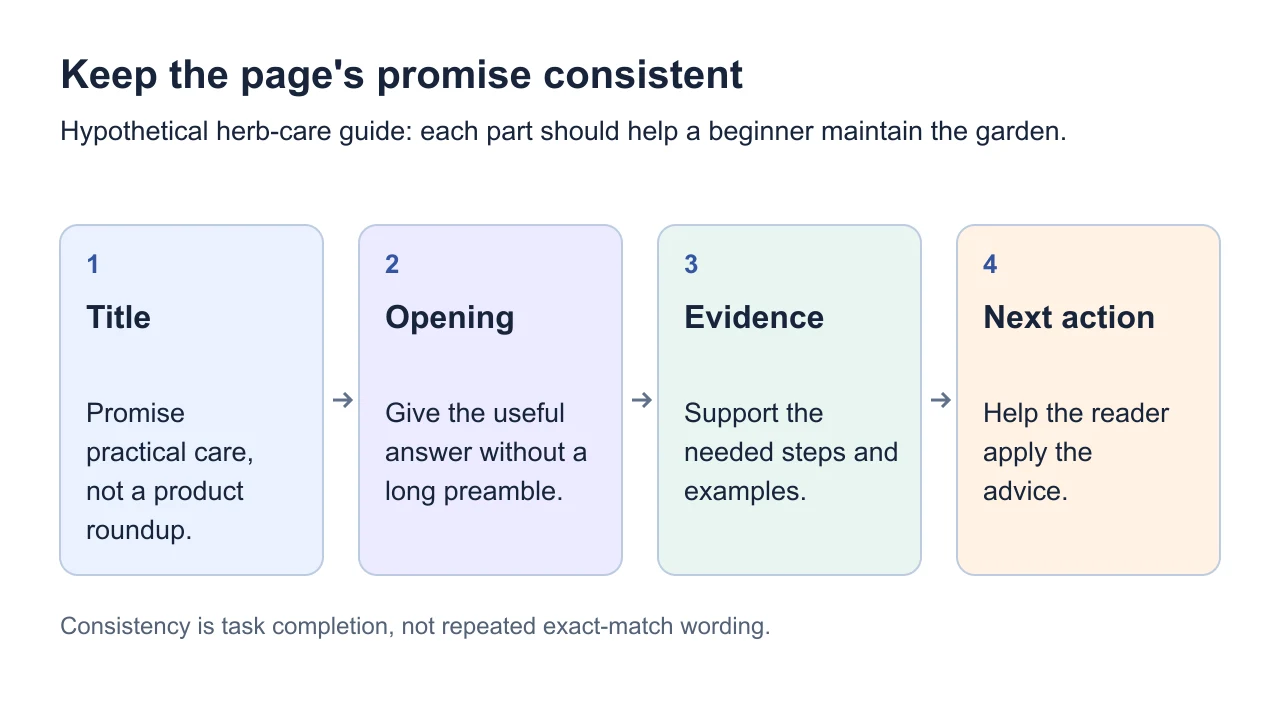
Consistency means fulfilling a task, rather than repeating an exact phrase.
Google recommends clear, concise and descriptive title text, while its language systems can understand wording variations. These are different from a fixed keyword-density target. Title guidance, language matching guidance.
Save the chosen theme, alternatives rejected, evidence date and intended reader action in the revision brief. That record makes later review easier: you can ask whether the page served the selected task rather than whether one term moved one position.
When ready, use SearchCub to explore relevant keyword and competitor questions. Treat available estimates as supporting evidence, and keep the page's actual usefulness central to the decision.